
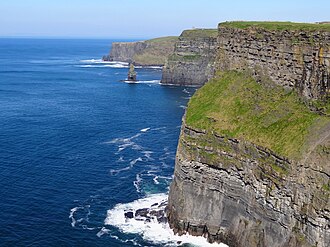
Cliffs of Moher best panoramic viewpoints — Where to get the widest views & photos
The Cliffs of Moher are one of Ireland’s most dramatic coastal panoramas — a sweeping line of rock and sea that invites wide-angle photography and slow, expansive viewing. Whether you want the full cliff-top sweep, a view that captures the headland curve, or an island-studded horizon, choosing the right panoramic viewpoint will make the difference between a good photo and a legendary one.
Book a guided Cliffs of Moher tour to reach the best panoramic viewpoints and make the most of your visit. Guided tours help you find the quieter vantage points, save time on logistics, and focus on photographic opportunities.
Why panoramic viewpoints matter at the Cliffs of Moher — what makes a great wide-angle vista
A true panoramic viewpoint gives you a sense of scale: distant sea, dramatic cliff drop, and the curve of headlands that leads the eye across the frame. At the Cliffs of Moher, factors that make a great wide-angle vista include an unobstructed foreground edge, layered middle distance (rock formations or seabirds), and a long horizon that includes islands or headlands.
Good panoramas are also about light and visibility. Harsh mid-day sun can flatten textures, while low-angle light at sunrise or sunset sculpts the cliffs and adds depth. Likewise, clear visibility can reveal Aran Islands and the distant Burren—important compositional elements for wide shots.
Overview of the visitor areas that offer true panoramic views
Visitor Centre platform
The visitor centre platform provides a reliable, controlled vantage with wide sweep left and right. Built viewing areas are handy for quick panoramas and for family groups where safety and easier access matter. From here you can photograph long runs of cliff faces and watch changeable weather sweep in over the Atlantic.
O’Brien’s Tower
O’Brien’s Tower sits near the central section of the cliffs and is ideal for classic postcard panoramas. Climb the approaches for higher vantage points that compress the cliff line into dramatic ribbons. The tower area is a focal point for many photographers because it frames the cliff arc and often includes Aran Islands on clear days.
Hags Head and the western headlands
The western headlands and Hags Head offer raw, wilder panoramas with fewer built viewing platforms. These spots can deliver the widest apparent sweep — especially where the cliff line curves toward the horizon. Expect more rugged pathways and fewer crowds, and plan extra time for movement between viewpoints.
How to choose the right viewpoint for the view you want
Begin by deciding what you want in the frame: a wide cliff-top sweep, the headland curve, distant islands, or dramatic sea stacks. Each viewpoint emphasizes different elements:
- Sea and horizon: higher, more open platforms show the broad ocean and distant islands.
- Headland curve: western headlands and O’Brien’s Tower capture the arc of the cliffs leading into the sea.
- Cliff-top sweep: the visitor centre platform and nearby paths give a continuous, panoramic cliff line.
- Islands and stacks: look for viewpoints that include Aran Islands in the distance — great on clear days.
If you’re combining your visit with nearby activities, consider transport and timing. For example, visitors coming from Galway should check options for getting to Doolin before choosing how much time to dedicate to each viewpoint; see Galway to Doolin transport options for visiting the Cliffs of Moher.
Timing your visit for panorama-friendly conditions
Light, visibility, tide, and crowds all influence a panoramic shot. Early morning and late afternoon light tend to produce the most striking results, with low sun adding texture to the cliff faces. Clear days reveal distant islands; misty or stormy days create moodier, more dramatic panoramas.
Visibility can change quickly — coastal fog and sea spray reduce distant detail. Check current conditions before you go and be prepared to adapt your plan. Crowds concentrate around popular platforms mid-day; for quieter panoramas, arrive early, stay later, or head to the wilder western headlands and Hags Head.
Access and practicalities: paths, viewpoints, safety, and accessibility
Paths between main viewpoints are generally well-trodden but can be uneven, narrow, or exposed to wind. Stay behind safety barriers where provided; cliff edges are unstable in places. Wear sturdy footwear and a windproof layer — weather turns quickly on the edge of the Atlantic.
Accessibility varies: the visitor centre and its main platforms have more accessible paths and facilities, while O’Brien’s Tower and western headlands involve steeper walking and rougher ground. If mobility is limited, prioritise the visitor centre platform and ask staff or tour operators about accessible options. Check current official information for any temporary path closures or safety updates.
Getting panoramic views from the water
Boat and sea tours offer a very different kind of panorama: from sea level you see the vertical grandeur of the cliffs and the weathering patterns on their faces. Sea views compress height and reveal stacked geology, arches, and nesting seabird colonies that aren’t visible from the top.
Boat panoramas lack the wide headland sweep you get from high vantage points, but they add scale and drama. If you plan to combine cliff-top and sea-level images, the contrast makes a compelling portfolio. For logistics, many visitors depart from Doolin — pair your visit with local options and dining: see Doolin seafood near the harbour — where to eat before or after the Cliffs.
Photography essentials for panoramic shots
Composition tips: use a wide focal length to include foreground and horizon, but consider shooting multiple overlapping frames for stitched panoramas if you want ultra-wide detail. Include foreground elements — pathways, people, rocks — to give scale and lead the eye into the scene.
Gear and lenses: a wide-angle lens (16–35mm on full frame or equivalent) is essential for cliff-top sweeps. For higher-resolution panoramas, a tripod and a nodal-head or a stable ball head help with stitching. A polariser reduces glare and can deepen skies; neutral density filters allow for long exposures to smooth sea motion.
Quick camera settings: on clear days start at low ISO (100–200) and a moderate aperture (f/8–f/11) for sharpness, adjusting shutter speed for light. In changing weather, use matrix metering and bracket exposures for HDR panoramas. If you’re on a boat, increase shutter speed to avoid motion blur and stabilise the camera against handrails if possible.
Don’t forget seabirds and flora as foreground interest — consult the Cliffs of Moher Coastal Flora Checklist and our Seabird watching guide for identification and composition ideas.
Planning with tours and day trips
Guided tours can be the most efficient way to reach prime panoramic spots — guides know where to go for light and visibility and can time visits to avoid crowds. When booking, confirm pickup points, how long the tour stops at the cliffs, and whether the itinerary includes boat views or the western headlands.
For independent travellers, plan transport carefully. If you’re connecting from Galway or making a day trip, review transport options in advance: Galway to Doolin transport options for visiting the Cliffs of Moher will help you decide on timing and connections.
Book a guided Cliffs of Moher tour to reach the best panoramic viewpoints and make the most of your visit. Guided options often include local insights, photography tips, and access to quieter viewpoints you might miss on your own.
For groups or private photography-focused visits, consider private tours that allow flexible timing and extended stops; confirm the group size and itinerary in advance with the operator to ensure you reach the exact panoramic spots you want.
Final practical checklist before you go
- Check weather, visibility, and any official advisories for the Cliffs of Moher on the day of your visit.
- Decide which viewpoint matches your photographic goals: coast sweep, headland curve, islands, or cliff-face detail.
- Pack for wind and sudden rain, with sturdy shoes for uneven paths.
- Bring spare batteries and memory cards if you plan long panoramic shoots or bracketed HDR sequences.
- Consider combining your visit with local activities — cycling to the Aran Islands from Doolin is a great follow-up: Aran Islands Car-Free Cycling Routes — Planning from Doolin for Cliffs of Moher Visitors.
Book a guided Cliffs of Moher tour to reach the best panoramic viewpoints and make the most of your visit. If you prefer a private or group experience tailored to photography goals, contact the team to arrange a specialised tour.
FAQ
What are the best times of day for panoramic views at the Cliffs of Moher?
Early morning and late afternoon offer the most dramatic light for panoramas, with longer shadows and richer texture on the cliff faces. Midday can be useful on clear days but often produces flatter light. Always check current weather and visibility before heading out.
Can I get panoramic views without entering the visitor centre or paying any fees?
Yes — several cliff-top paths and headlands provide panoramic views visible from public access points. The visitor centre offers more controlled platforms and facilities, but you can still access wide vistas elsewhere. Check local access routes and any temporary restrictions before your visit.
Are panoramic viewpoints accessible for people with limited mobility?
Accessibility varies. The visitor centre and its main platforms have better access than more remote headlands, but some viewpoints involve steps or uneven ground. If accessibility is a concern, plan to use the visitor centre platform and ask staff or tour operators about options; always check current official information for the latest accessibility details.
Do boat tours provide better or different panoramic views compared with cliff-top viewpoints?
Boat tours provide a different, often more dramatic perspective of the cliffs from sea level, showing vertical faces and geological features not visible from above. Cliff-top viewpoints give the widest horizontal sweep, including headland curves and distant islands. For the fullest photographic record, experience both if possible.