Aran Islands Cultural Sites from Doolin — Visitor’s Cultural Guide
The Aran Islands are a concentrated archive of Irish language, stone-built archaeology and island life within an easy journey of Doolin. For visitors who place culture at the center of their trip—archaeology, traditional music, craft makers and daily island customs—the three islands offer distinct, walkable experiences that feel immediate and human. This guide focuses on what to see and how to experience living culture from Doolin, prioritising respectful engagement with sites and communities rather than ferry timetables or technical travel details.
Plan your cultural visit from Doolin — book a guided cultural tour or check options to build a self-guided day that matches your interests and mobility needs.
Why the Aran Islands matter: an introduction to island heritage visitors from Doolin can experience
The Aran Islands—Inis Mór, Inis Meáin and Inis Oírr—preserve a living link between Gaelic language, early Christian sites and prehistoric monument-building. Their limestone pavements, low stone walls and coastal forts create a landscape shaped by centuries of practical labour and ritual life. Visitors arriving from Doolin will find archaeological monuments that are legible at human scale, traditional music that still forms the social heart of evenings, and artisan practices—knitting, basket-making, stone repair—passed down through families. The islands are compact: you can focus on a handful of cultural highlights and still leave with a sense of depth.
Top cultural sites on Inis Mór
Inis Mór (Inishmore) is the largest island and home to its most famous prehistoric and monastic remains. Archaeological highlights are best approached on foot, with time to absorb both the structures and their sea-ruin settings.
Dún Aonghasa
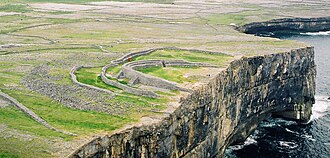
Dún Aonghasa is a dramatic stone fort sited on a cliff edge. The scale of its drystone walls and the setting overlooking the Atlantic make it a powerful place to contemplate prehistoric life and coastal defence. Give yourself time to walk the fort circuit slowly and to read the interpretive information available on site. For protection of fragile turf and archaeology, use marked paths and follow any site guidance.
Na Seacht Teampaill and other monastic sites
Na Seacht Teampaill (the Seven Churches) is a cluster of medieval ecclesiastical remains set among burial plots; the quiet domestic scale of island chapels helps illustrate continuity between early Christian practice and later rural life. Inis Mór also features hut sites, fulacht fiadh (cooking pits) and souterrain remnants—small details that reward a slow walk and a willingness to imagine routine life in past centuries.
Other archaeological highlights
Look for smaller ringforts, standing stones and cairns scattered across the island. Each speaks to different periods of occupation and ritual. If you enjoy photography or botanical observation, pair visits to monuments with a quick look at the local flora; our coastal flora checklist is a helpful companion for recognising plant species that thrive in sea-sprayed limestone.
Cultural highlights on Inis Meáin and Inis Oírr
Inis Meáin sits between the larger islands and has a distinctive cultural profile. It has retained a quiet, community-oriented creative life that invites slower, curated experiences; Inis Oírr, smaller and more sheltered, is known for its friendly pub sessions and approachable artisan stalls.
Artisan studios and craft on Inis Meáin
Inis Meáin supports several artisan studios where local makers work with traditional materials—textiles, tweed and stone. Workshops sometimes welcome visitors by appointment or offer short demonstrations. If you want to seek out makers, ask locally once you arrive on the island; small-scale craft practices are often family-run and may not be advertised in advance. For wider County Clare craft shopping ideas to complement an island visit, see our guide to County Clare artisan craft shopping near the Cliffs.
Island churches and community traditions on Inis Oírr
Inis Oírr’s compact village includes a small church, a heritage centre and a handful of cafés and pubs where islanders and visitors meet. Community events—mass, céilí nights and seasonal celebrations—are where living traditions surface most strongly. Even outside scheduled events, a visit to the island pub in the evening often results in impromptu music sessions; these are intimate, social gatherings and are best enjoyed with an attitude of respect and restraint.
How to experience living culture
Living culture on the Aran Islands is participatory and relational. Here are practical ways to engage respectfully and meaningfully.
Pubs and music sessions
Pubs remain the primary venue for traditional music. Sessions vary by night and season—some are drop-in and casual, others are community-centric. When attending, listen first, enjoy the performance, and follow local cues about recording, joining in, or buying a drink. Treat sessions as social exchanges rather than performances staged for tourists.
Irish language and conversation
The Gaelic language is present on the islands; you will hear it in everyday conversation and signage. Learn a few greetings—simple phrases are appreciated—and be open to hearing local stories. A friendly, curious approach will often lead to longer conversations about island life and history.
Craft workshops and demonstrations
Look for advertised workshops in island studios or ask at the harbour information point. Many makers prefer bookings or a brief advance notice. Hands-on workshops are a genuine way to learn about traditional techniques and to leave with a personal, locally made souvenir.
Seasonal events
Island festivals, religious observances and seasonal fairs reveal customs embedded in place. These events are not always published widely—check local notices when you arrive and ask residents for recommendations. Always verify current event information before planning a visit.
Planning a cultural visit from Doolin
From Doolin you can choose guided cultural tours or self-guided exploration. Each approach has advantages.
Guided cultural tours vs. self-guided exploration
Guided tours led by local guides or cultural specialists can provide structured interpretation: historical context, stories tied to places, and access to lesser-known sites. For visitors focused on archaeology or craft, a guide can point out features you might otherwise miss. Self-guided visits offer flexibility and the chance for quiet discovery; bring a printed map, a good guidebook or download route guidance in advance. For cyclists, consider our Aran Islands car-free cycling routes planning notes from Doolin—cycling opens up hinterland lanes and small villages at your own pace.
What to check before you go
Check current official information on visitor facilities, site access and any local guidance that might affect your visit. Ferry and pier conditions can vary; confirm landing options and return plans. If you plan to book workshops or studio visits, contact hosts ahead of time when possible.
Practical tips for respectful visiting and protecting heritage sites
Heritage on the Aran Islands is vulnerable to wear, weather and unmanaged access. Responsible visiting helps keep sites meaningful for island communities and future visitors.
- Use marked footpaths and respect fenced areas around archaeological sites.
- Do not climb or sit on fragile stonework; avoid placing backpacks or equipment on ancient walls.
- Ask permission before photographing people, especially during private gatherings or religious services.
- Treat private property and croftland with care; always close gates and respect livestock.
- Take litter with you and avoid leaving micro-trash like plastic or food packaging behind.
When in doubt, follow guidance from local stewards or site notices and check current official information for any temporary restrictions.
Sample itineraries for half-day and full-day cultural-focused visits from Doolin
Half-day cultural visit (focused highlights)
Arrive on your chosen island and prioritise one major archaeological site—Dún Aonghasa on Inis Mór or a monastic site on the smaller islands. Allow time for a short village stroll to meet makers or visit a small heritage centre, then stop at a café or pub for local conversation. This compact plan suits visitors who want an intense cultural encounter without strenuous travel.
Full-day cultural visit (in-depth)
Start with a guided or self-guided walk to archaeological sites in the morning while light is good for viewing. After a village lunch, visit an artisan studio or attend a short workshop, then spend the afternoon visiting additional monuments or cycling a coastal lane. Finish with an evening pub session or a community event if available. This pace allows time for deeper conversations and unhurried observation.
For accommodation and pre- and post-island activities, Doolin offers a range of welcoming guesthouses that combine music and sea views—see our guide to Doolin guesthouses for music and sea views. Pair an island-focused day with a scenic cliff-side walk or photography session at the cliffs; our Cliffs of Moher panoramic viewpoints guide can help you decide where to go next.
Plan your cultural visit from Doolin — whether you prefer a small-group guided cultural tour or a private experience, you can arrange an itinerary that matches your interests. For private or group tours tailored to archaeology, music or craft access, enquire about private bookings to create a focused island cultural day.
FAQ
What are the must-see cultural sites on the Aran Islands for visitors coming from Doolin?
Dún Aonghasa on Inis Mór and Na Seacht Teampaill are top archaeological highlights. Also prioritise local craft studios, the small island churches and a pub session to experience music. Depending on your interests, pair a fort or monastic site with time in a maker’s studio or a community event.
Can I focus on cultural experiences on a day trip from Doolin, or is an overnight stay recommended?
You can have meaningful cultural experiences on a day trip, especially if you concentrate on one island and a few key activities. An overnight stay is recommended if you want to attend evening music sessions, take a full workshop, or explore multiple islands at a relaxed pace.
How can I find and book authentic local experiences like workshops or traditional music sessions from Doolin?
Ask at the harbour information point on arrival, check notice boards in island villages, and contact studios or pubs in advance when possible. Local guides and small-group tours organised from Doolin can also arrange introductions to makers and guaranteed access to cultural experiences.
Are archaeological sites and island cultural venues accessible to visitors with limited mobility?
Many island sites are located on uneven ground and require walking on rocky or grassy surfaces. Accessibility varies by site and island. If you have limited mobility, check current official information for individual site access details and ask tour providers or harbour staff in Doolin about options for reduced-mobility visits.